
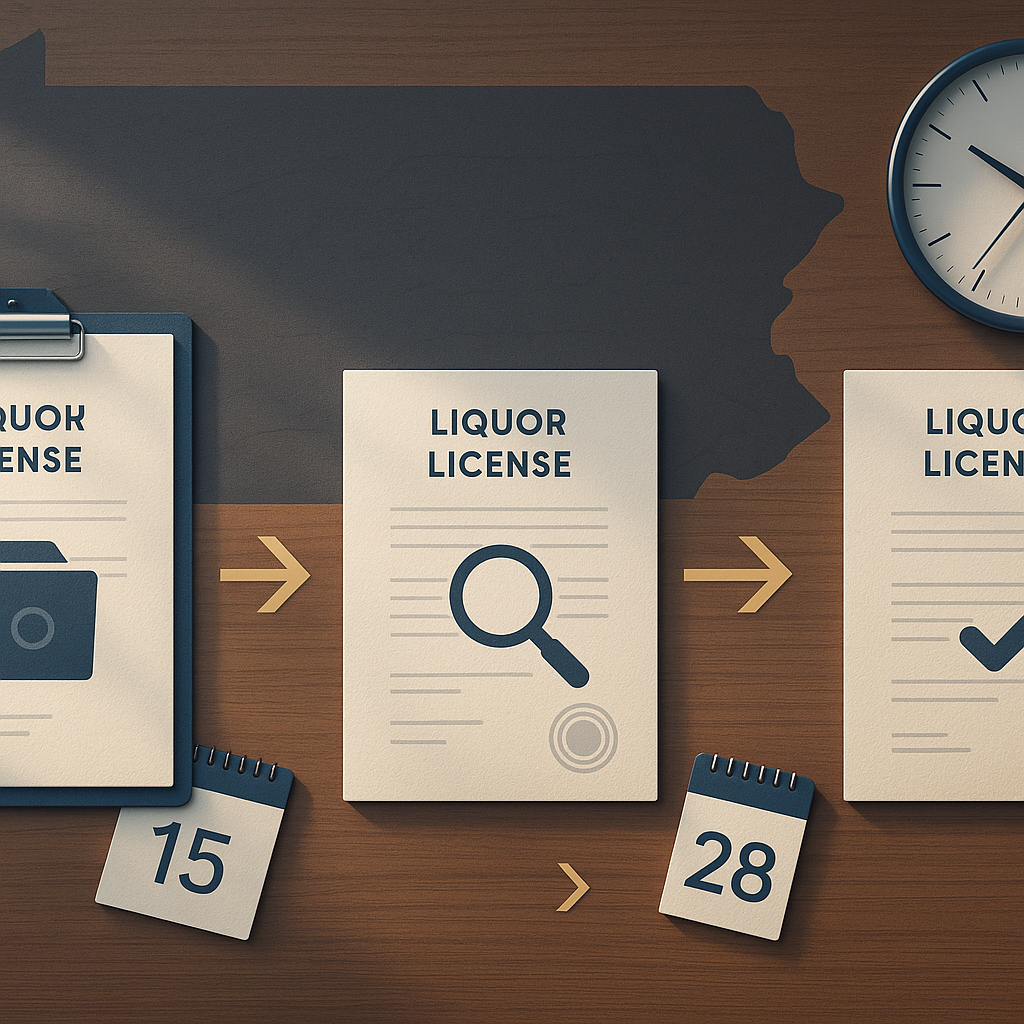
Opening a bar or restaurant in Pennsylvania starts with a clear view of the liquor license timeline. Buyers and sellers often hear conflicting estimates, but the real schedule hinges on packet completeness, municipal calendars, and PLCB review. This guide explains what truly drives timing so you can plan hiring, buildout, and financing with confidence.
Pennsylvania uses a quota system, so available licenses and pricing vary by county. That scarcity affects not only cost but also how long it takes to identify a viable license and secure approvals. We break down the steps from first discovery call through closing and opening day so you know what to expect.
If you are a first time buyer you will learn how to avoid common slowdowns like missing affidavits, unsequenced construction, or late tax clearances. If you are selling you will see how a clean file and realistic milestones speed the deal. Use this timeline to set expectations with your team, your landlord, and your lender.
A typical Pennsylvania liquor license transfer takes 8 to 16 weeks after a complete application. Expect diligence and packet prep, municipal posting or hearing if moving premises, PLCB review, and final approval. The biggest variables are document readiness, municipal calendars, inspections, and any issues like tax clearances or liens.
What to expect from first call to final approval
1) Discovery and diligence
- Confirm county and transfer type: person to person, place to place, or both
- Identify risks early: tax status, liens, prior citations, zoning or buildout conflicts
Time: 3 to 10 business days
2) Sourcing and price setting
- Review comps for your county
- Align offer terms with realistic timelines and contingencies
Time: 1 to 3 weeks in parallel with diligence
3) Packet preparation
- PLCB filings through PLCB plus and exhibits
- Premises diagram, lease or amendment, health and occupancy signoffs
- Public notice and posting steps if moving townships
Time: 2 to 4 weeks depending on landlord and plan sets
4) Municipal steps
- Post premises and publish notice where required
- Prepare for council or board appearance if a hearing is scheduled
Time: 2 to 6 plus weeks based on agendas and deadlines
5) PLCB review and approvals
- State review after a complete submission
- Respond to information requests
Time: commonly 4 to 8 plus weeks
6) Closing and opening day
- Disburse funds per agreement
- Finalize signage, manager appointments, hours policy, and recordkeeping
What can speed things up
- Complete, clean packet with correct exhibits
- Early tax clearance and lien checks
- Buildout plans aligned with alteration approvals
- Financing that matches milestone dates
What can slow things down
- Incomplete exhibits or missing affidavits
- Municipal calendars and holiday periods
- Prior violations or protests
- Unsequenced construction