
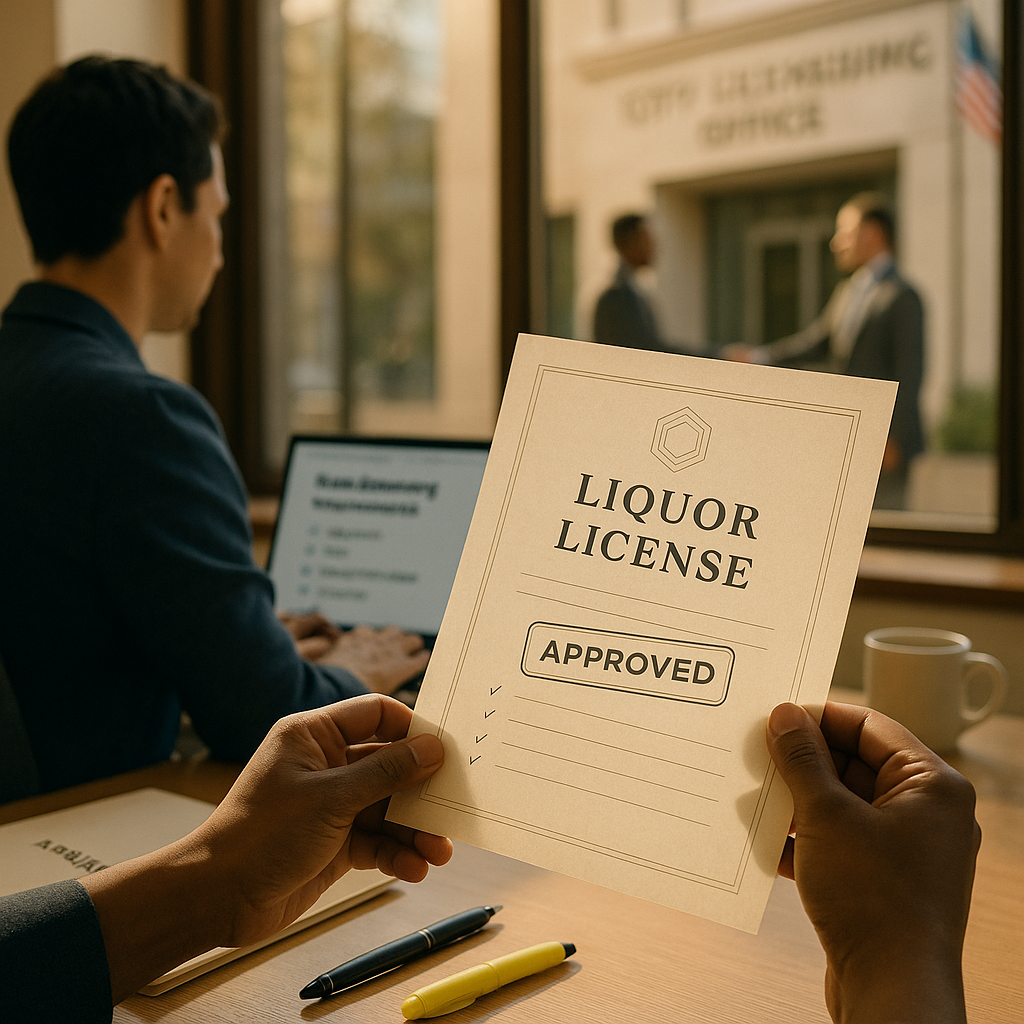
Buying a liquor license is a project with many moving parts. Success depends on choosing the right market, validating pricing, preparing a complete packet, and sequencing financing with approvals. This step by step guide simplifies the path so you can open on time and start generating revenue.
The rules differ by state and locality. Pennsylvania is quota based with county specific limits while New Jersey licensing is controlled by municipalities under state ABC rules. Understanding these frameworks helps you pick the right target and the right strategy.
You will learn where to find licenses, how to negotiate terms that protect your timeline, and how to avoid common bottlenecks. We cover documents, public notice, hearings, and the final steps to closing and opening day. Use this guide to move from search to signature with fewer delays.
To buy a liquor license, pick your state and locality, confirm transfer type, source active or pocket licenses, validate comps, negotiate terms, assemble filings, complete municipal and state steps, and align funding with milestones. Clean documents, calendar control, and early checks prevent delays.
Step by step guide
1) Pick your market and confirm the rules
- PA is quota based with county limits. NJ is municipal first under state ABC rules
- Define transfer type and site control
2) Source and price correctly
- Use county comps in PA and municipal comps in NJ
- Validate recent closed deals and current asks
- Budget for posting, publication, and inspection costs
3) Structure the deal
- LOI or APA with clear contingencies
- Escrow that matches milestones
- Remedies for missed dates
4) Prepare your packet
- Entity docs, IDs, lease or amendment, premises diagram
- Tax clearances, lien checks, and citation history
- Public notice plan and affidavit tracking
5) Align financing to milestones
- Liquor license, buildout, equipment, and working capital options
- Staged funding at lease execution, inspection, and approval
6) File, publish, and attend
- Municipal filings, police and background steps where applicable
- State filings through PLCB plus in PA or ABC requirements in NJ
- Appear at hearings and meet conditions
7) Close and open clean
- Disburse funds and finalize post approval requirements
- Set signage, hours, manager appointments, and recordkeeping
Cost drivers to plan for
- Market scarcity and competition
- Site readiness and alteration approvals
- Legal, publication, and inspection fees
- Time value of delays
Pro tips
- Start document collection on day one
- Use a single calendar owner for all postings and filings
- Keep a ready list of conditions you can accept at a hearing
- Store all affidavits and approvals for renewal